Snakebite. First aid for your dog
Be prepared and act fast.
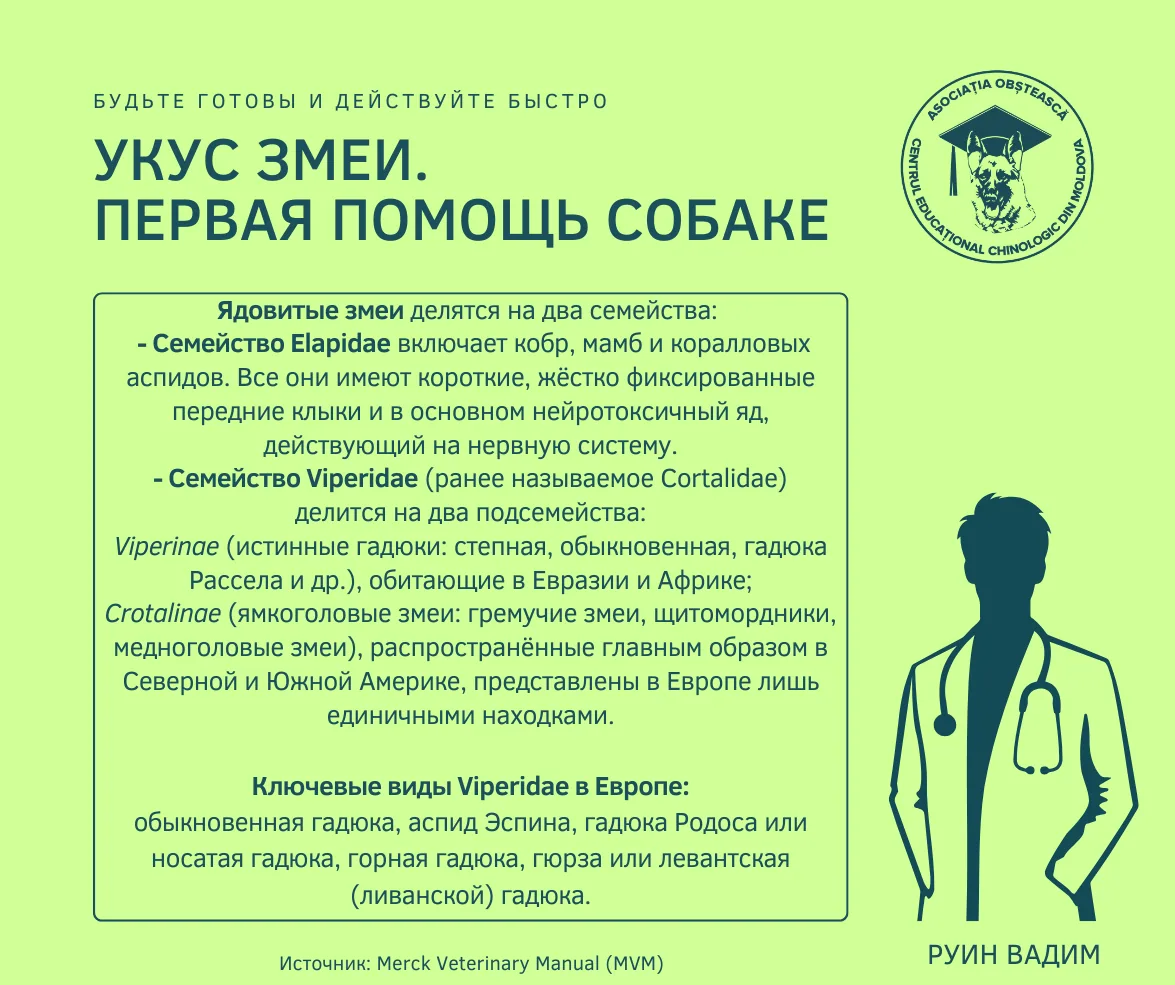
Venomous snakes
Venomous snakes fall into two families:
- The Elapidae family includes cobras, mambas and coral snakes. All of them have short, rigidly fixed front fangs and mainly neurotoxic venom, which acts on the nervous system.
- The Viperidae family (formerly called Crotalidae) is divided into two subfamilies: *Viperinae* (true vipers: the steppe viper, the common adder, Russell’s viper and others), which live in Eurasia and Africa; and *Crotalinae* (pit vipers: rattlesnakes, moccasins, copperheads), found mainly in North and South America and represented in Europe only by isolated finds.
Key Viperidae species in Europe: the common adder, the asp viper, the Rhodes viper or nose-horned viper, the mountain viper, and the gyurza or Levant (Lebanese) viper.
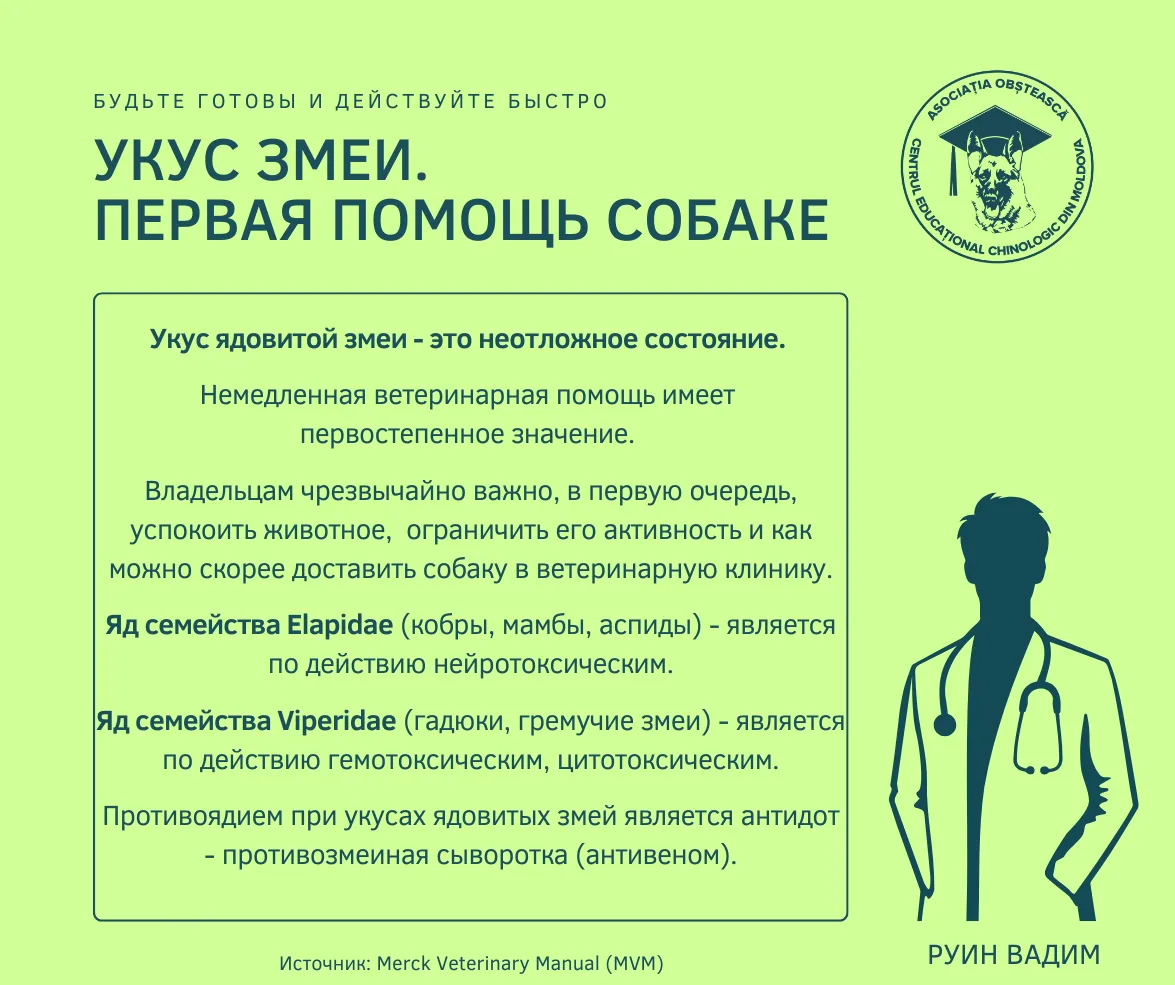
The venom of the Elapidae family (cobras, mambas, coral snakes) is neurotoxic.
The venom of the Viperidae family (vipers, rattlesnakes) is haemotoxic and cytotoxic.
The antidote for venomous snakebites is antivenom serum (antivenin).
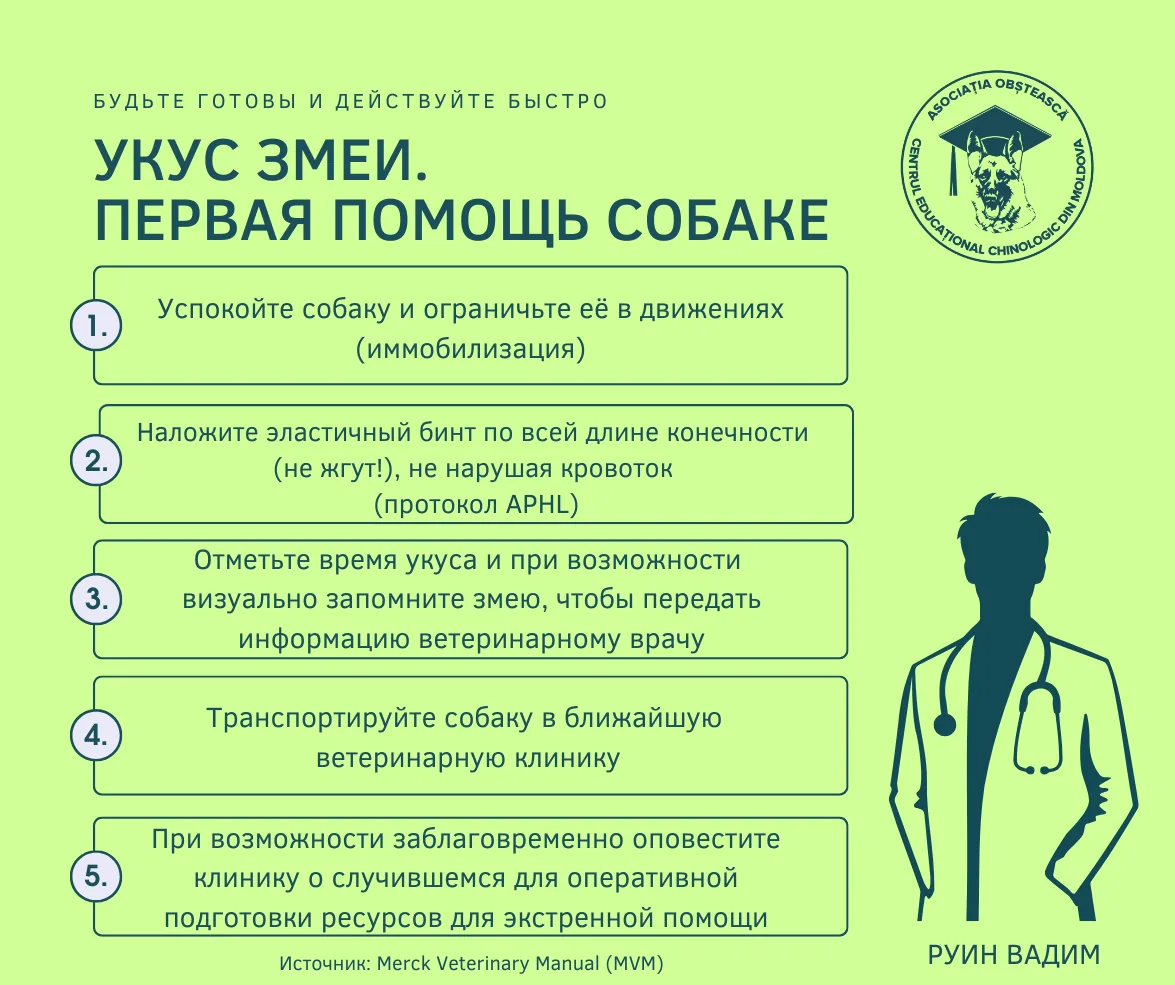
First aid for your dog
- Calm the dog and restrict its movement (immobilisation).
- Apply an elastic bandage along the whole length of the limb (not a tourniquet!) without cutting off the blood flow (APHL protocol).
- Note the time of the bite and, if possible, remember what the snake looked like so that you can tell the vet.
- Take the dog to the nearest veterinary clinic.
- If possible, let the clinic know in advance what has happened so that it can promptly prepare what is needed for emergency care.
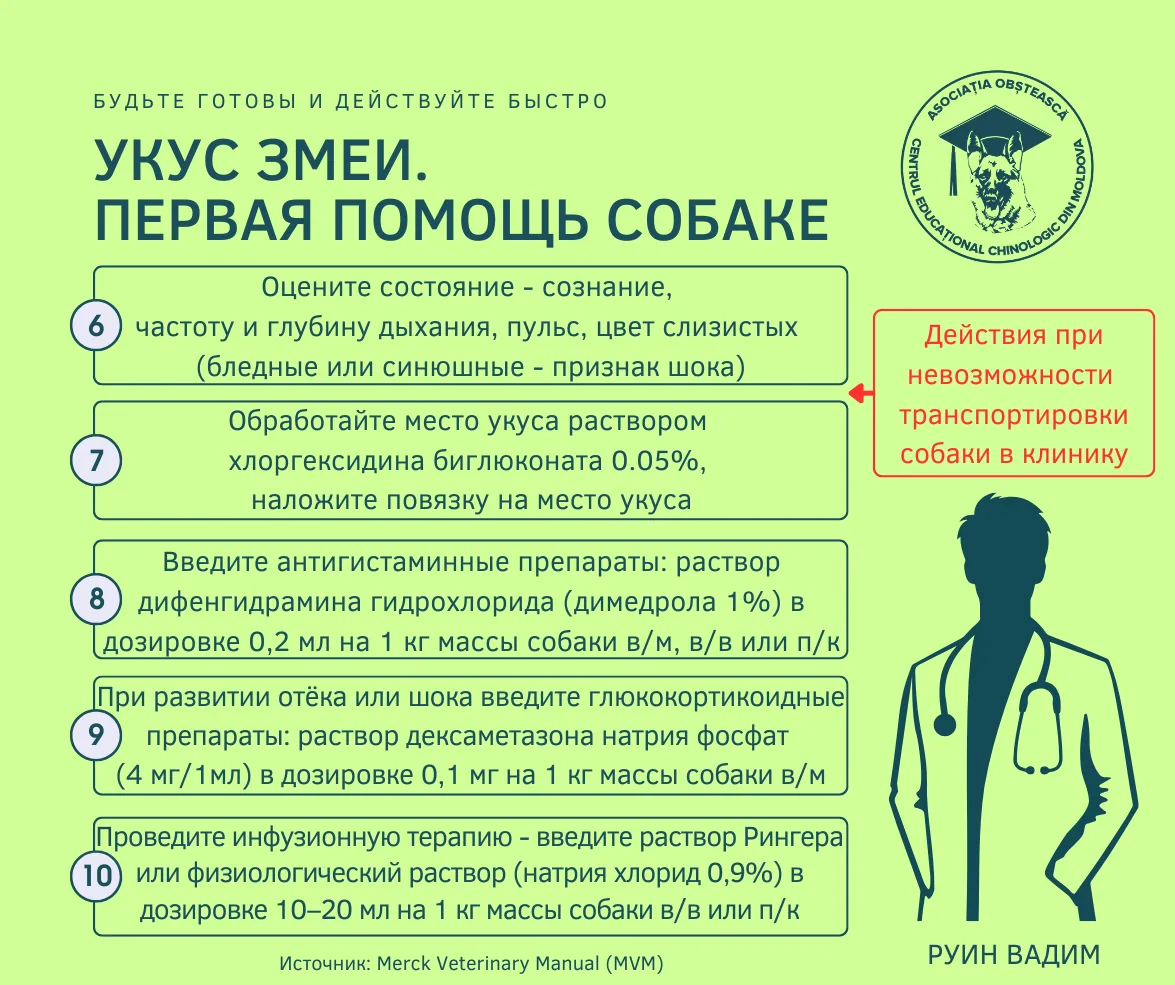
What to do if the dog cannot be taken to a clinic
- Assess the dog’s condition: consciousness, breathing rate and depth, pulse and the colour of the mucous membranes (pale or bluish membranes are a sign of shock).
- Clean the bite site with 0.05% chlorhexidine digluconate solution and apply a dressing to it.
- Give antihistamines: diphenhydramine hydrochloride solution (Dimedrol 1%) at a dose of 0.2 ml per 1 kg of the dog’s body weight, IM, IV or SC.
- If swelling or shock develops, give glucocorticoids: dexamethasone sodium phosphate solution (4 mg/1 ml) at a dose of 0.1 mg per 1 kg of the dog’s body weight, IM.
- Start fluid therapy: give Ringer’s solution or normal saline (0.9% sodium chloride) at a dose of 10–20 ml per 1 kg of the dog’s body weight, IV or SC.
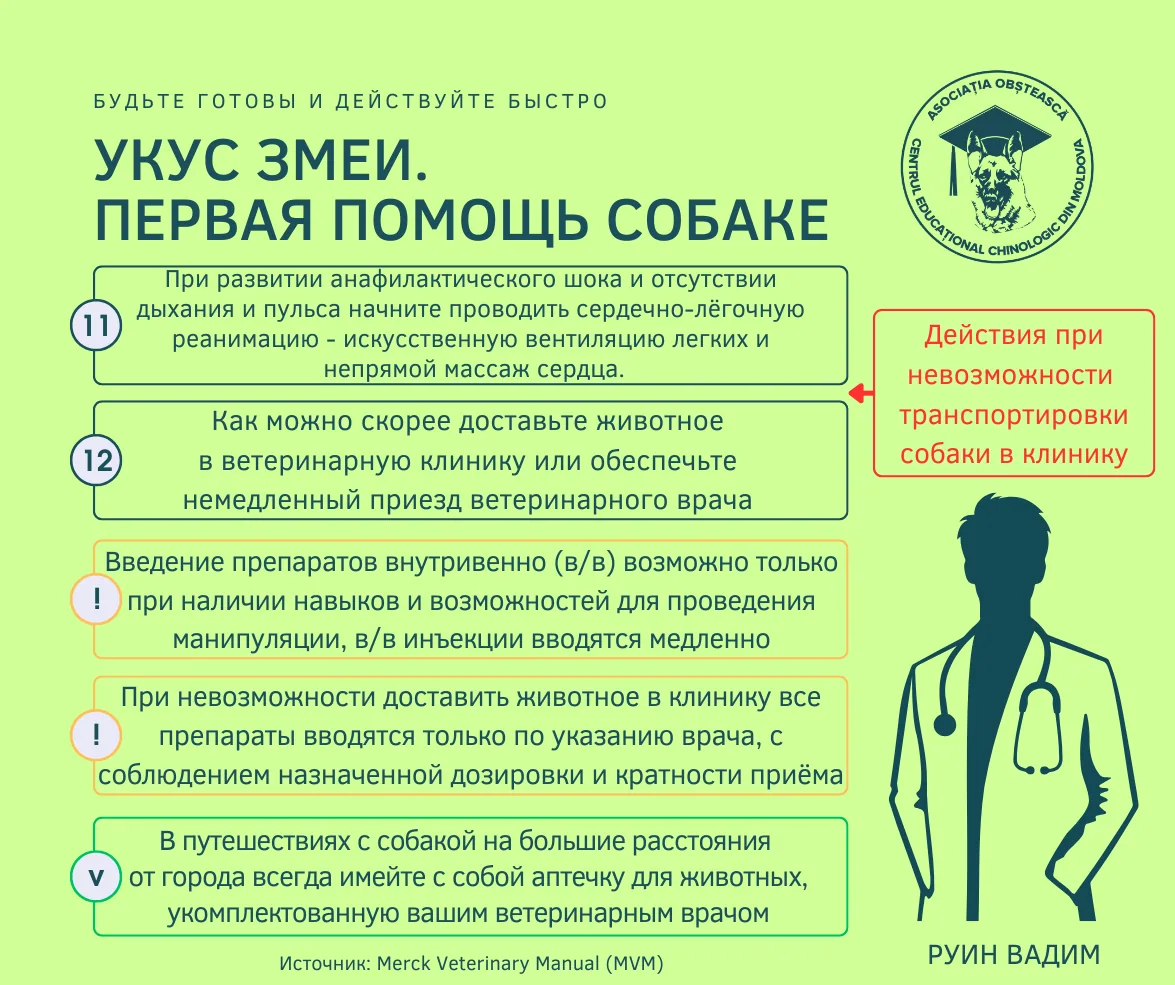
- If anaphylactic shock develops and there is no breathing or pulse, begin cardiopulmonary resuscitation: artificial ventilation and external chest compressions.
- Get the animal to a veterinary clinic as quickly as possible or arrange for a vet to come out immediately.
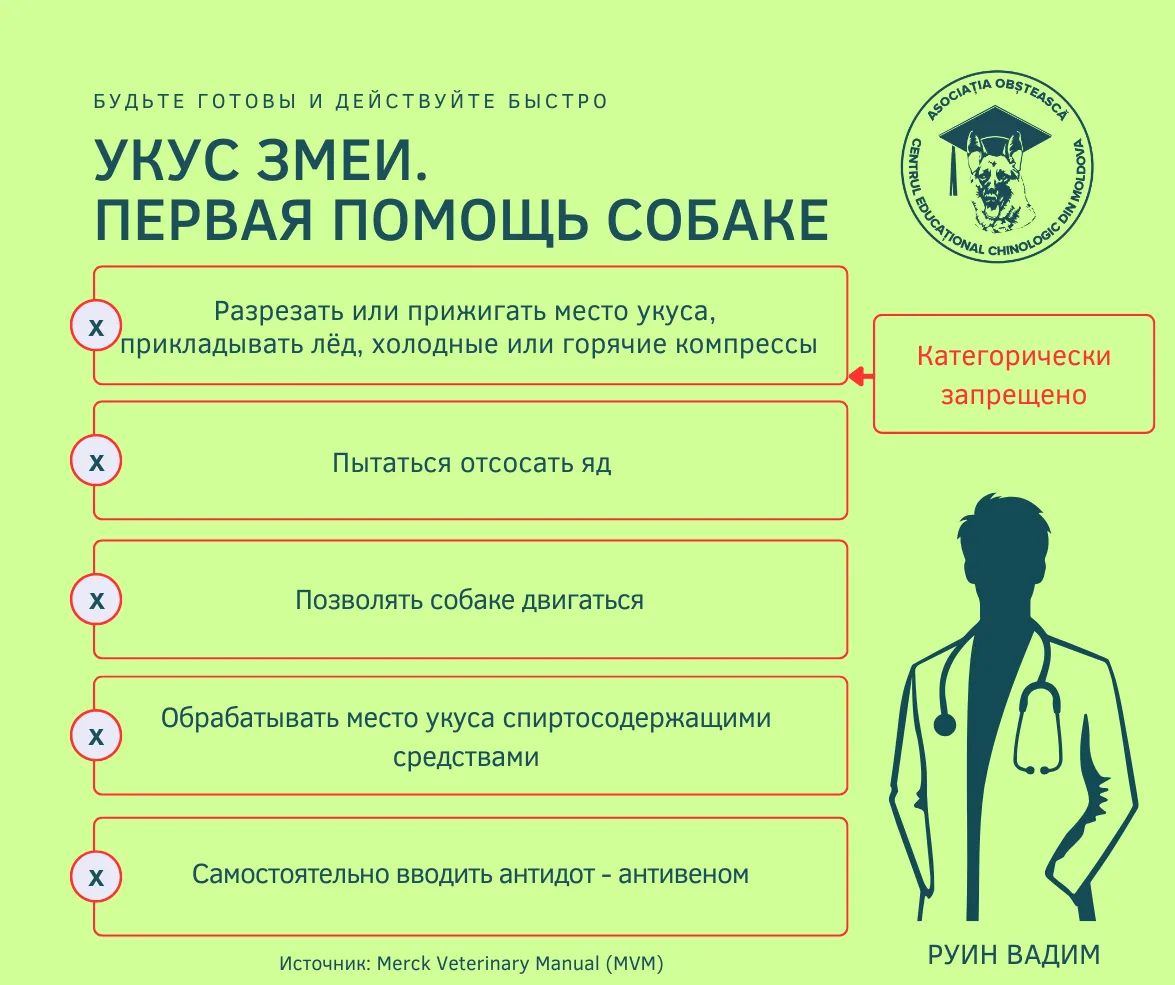
Strictly forbidden
- Cutting or cauterising the bite site, or applying ice, cold or hot compresses.
- Trying to suck out the venom.
- Letting the dog move about.
- Treating the bite site with alcohol-based products.
- Giving the antidote (antivenom) yourself.
For it to be as effective as possible, the antidote should be given as soon as possible – within the first 4 hours after the bite.
Take great care when walking your dog in long grass, especially in the warm season, when snakes are most active. Use a short lead, avoid dense vegetation and keep a close eye on your dog’s behaviour.
Prepared by: Vadim Ruin – veterinarian, Candidate of Agricultural Sciences, chinologmd@gmail.com.
Source: Merck Veterinary Manual (MVM).
Infographic