
LABOKLIN genetic tests (Germany)
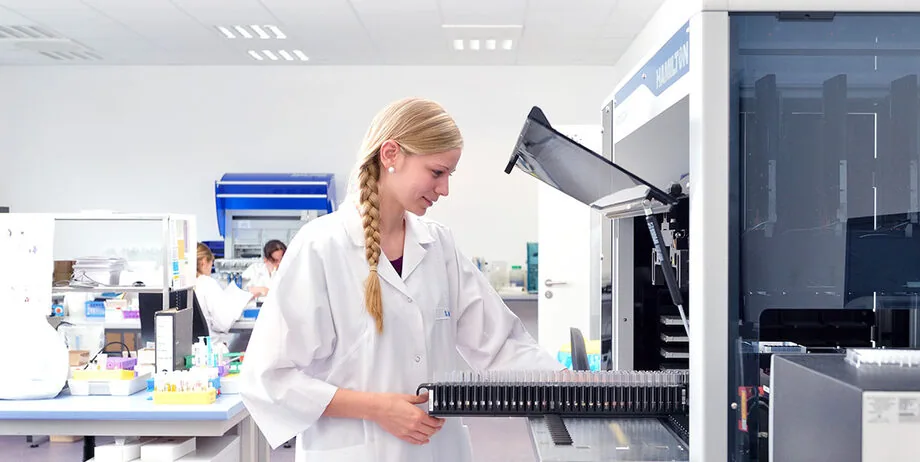
LABOKLIN is a European leader in veterinary laboratory diagnostics, founded in Germany in 1989 by Dr Elisabeth Müller.
Contents

The laboratory combines scientific expertise, innovative technologies and impeccable quality standards, and enjoys a high level of trust among veterinarians and breeders.
The range of diagnostic services offered by LABOKLIN covers a broad spectrum of tests – from routine clinical analyses to high-precision genetic diagnostics – making it possible to identify hereditary diseases and supporting well-founded decisions in breeding.
LABOKLIN results are regarded as a benchmark of reliability and are used throughout Europe as a basis for safeguarding animal health and developing responsible cynology.
Test request form (−10% show discount)
Taking a cheek swab sample
Material
The test requires buccal (cheek) epithelial cells; 2 cotton swabs are used per animal.
Procedure
- The animal must not eat or drink for 1–2 hours before the sample is taken.
- To take the sample, collect cells from the inside of the cheek by rotating the cotton swab and moving it back and forth. A genetic test needs a sufficient amount of cellular material; saliva alone is not enough. The cotton swab must not contain any blood.
- Let the cotton swabs dry, then place them in a plastic tube.
- The tube must be labelled with the animal’s identification details (microchip number).
- Send the samples as soon as possible together with the test request form.
Taking a dried blood spot sample
Material
The test requires drops of blood (approximately 0.5 ml) applied to filter paper or a tissue. Three full drops of blood are enough. A special “Blood spot” kit is recommended.
Procedure
- The blood must be taken by a veterinarian.
- Use a sterile syringe.
- Apply the drops of blood directly to the filter paper, avoiding any contact between the blood and your hands.
- Wait until the sample has dried completely (about 2 hours), then place it in a plastic bag for transport.
- When taking samples from several animals, a new sterile syringe must be used for each animal.
- If blood gets on your hands, wash them thoroughly before taking a sample from the next animal to avoid contamination.
- All samples must be clearly labelled and the plastic bag must be sealed airtight.
LABOKLIN – responsible breeding starts with diagnostics
Our contacts
- Address
- 7 Alexandru cel Bun St., office 208, Chișinău
- Monday – Thursday
- 09:00–18:00
- Friday
- 09:00–17:00
- Saturday, Sunday
- Closed
- Phone
- +373 79 170 889
- info@chinolog.md