Sunstroke and heatstroke. First aid for your dog
Save this – it could save a life. Act quickly and step by step.
Contents
- Causes of heatstroke and sunstroke
- Thermoregulation
- Symptoms of heatstroke and sunstroke
- How to protect your dog from heatstroke and sunstroke
- Strictly forbidden in heatstroke and sunstroke
- First aid before veterinary care for a dog with heatstroke or sunstroke
- 6 steps if a dog with heatstroke or sunstroke is not breathing and has no pulse
- Infographic
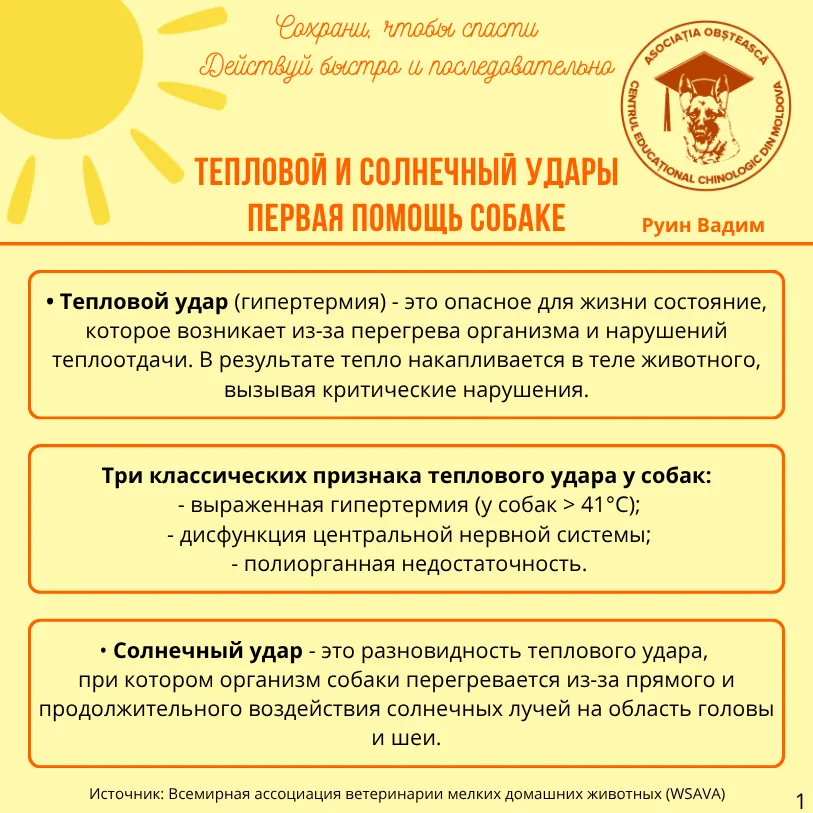
Heatstroke (hyperthermia) is a life-threatening condition caused by the body overheating and failing to give off heat. As a result, heat builds up in the animal’s body and leads to critical disturbances.
Three classic signs of heatstroke in dogs
- marked hyperthermia (in dogs > 41 °C);
- central nervous system dysfunction;
- multiple organ failure.
Sunstroke is a form of heatstroke in which a dog’s body overheats because of direct, prolonged exposure of the head and neck to the sun’s rays.
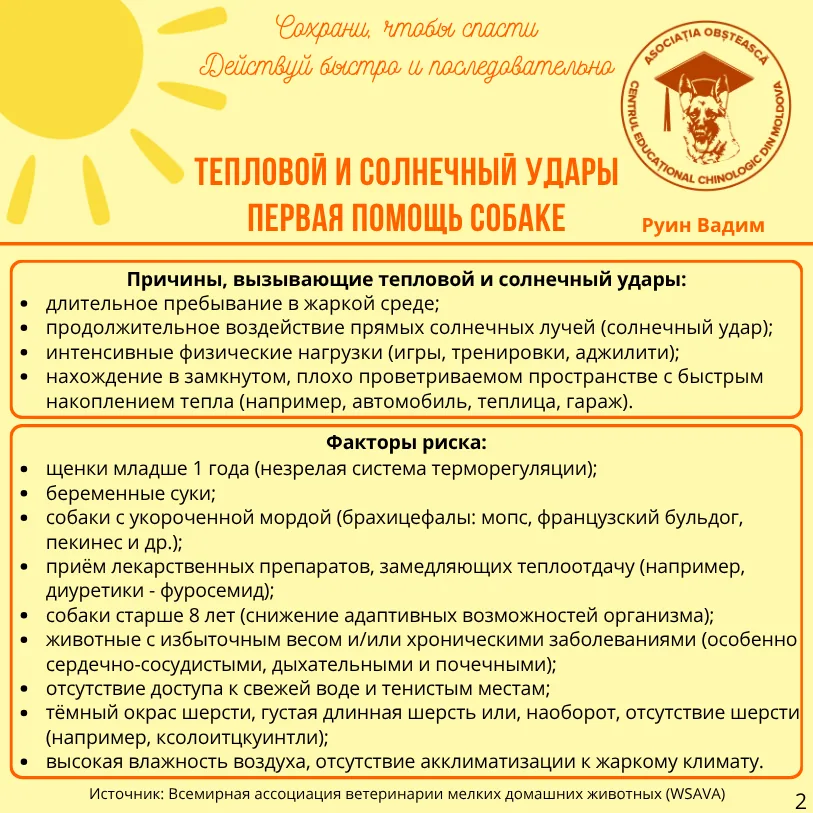
Causes of heatstroke and sunstroke
- spending a long time in a hot environment;
- prolonged exposure to direct sunlight (sunstroke);
- intense physical exertion (play, training, agility);
- being in an enclosed, poorly ventilated space where heat builds up quickly (for example, a car, a greenhouse or a garage).
Risk factors
- puppies under 1 year old (immature thermoregulation);
- pregnant bitches;
- short-muzzled dogs (brachycephalic breeds: Pug, French Bulldog, Pekingese, etc.);
- medicines that slow down heat loss (for example, diuretics such as furosemide);
- dogs over 8 years old (the body’s reduced capacity to adapt);
- overweight animals and/or animals with chronic diseases (especially cardiovascular, respiratory and kidney disease);
- no access to fresh water or shade;
- a dark coat, a thick and long coat or, conversely, no coat at all (for example, the Xoloitzcuintle);
- high air humidity and lack of acclimatisation to a hot climate.
Thermoregulation
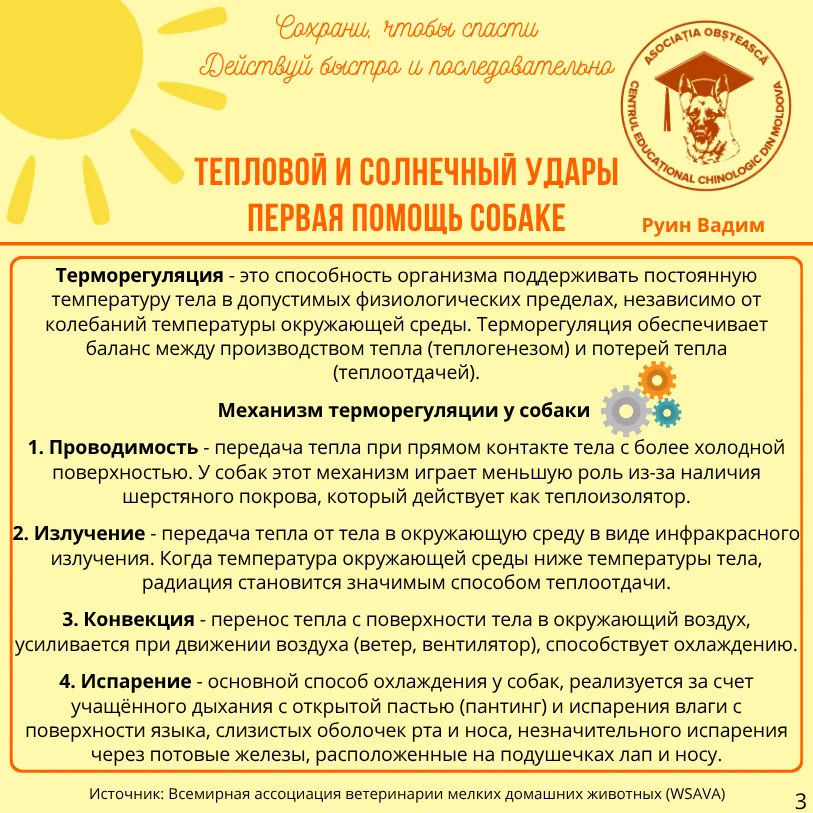
Thermoregulation is the body’s ability to maintain a constant body temperature within acceptable physiological limits regardless of fluctuations in the ambient temperature. Thermoregulation keeps a balance between heat production (thermogenesis) and heat loss (thermolysis).
How thermoregulation works in dogs
- Conduction – heat transfer through direct contact of the body with a cooler surface. In dogs this mechanism plays a smaller role because the coat acts as thermal insulation.
- Radiation – heat transfer from the body to the surroundings in the form of infrared radiation. When the ambient temperature is lower than body temperature, radiation becomes an important route of heat loss.
- Convection – heat transfer from the body surface to the surrounding air; it increases when the air moves (wind, a fan) and helps cooling.
- Evaporation – the main way dogs cool down; it works through rapid open-mouthed breathing (panting) and evaporation of moisture from the surface of the tongue and the mucous membranes of the mouth and nose, with a little evaporation through the sweat glands on the paw pads and the nose.
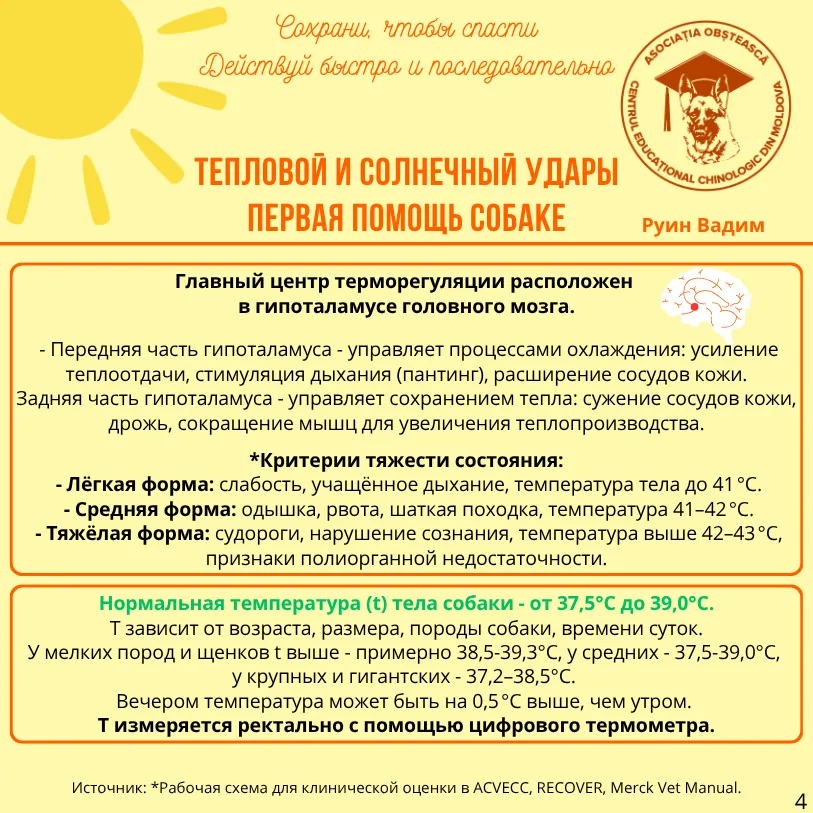
The main thermoregulation centre is located in the hypothalamus of the brain.
- The anterior hypothalamus controls cooling: increasing heat loss, stimulating breathing (panting) and dilating the blood vessels of the skin.
- The posterior hypothalamus controls heat conservation: constricting the blood vessels of the skin, shivering and muscle contractions to increase heat production.
Severity criteria*
- Mild form: weakness, rapid breathing, body temperature up to 41 °C.
- Moderate form: laboured breathing, vomiting, unsteady gait, temperature 41–42 °C.
- Severe form: seizures, impaired consciousness, temperature above 42–43 °C, signs of multiple organ failure.
*Working scheme for clinical assessment based on ACVECC, RECOVER and the Merck Vet Manual.
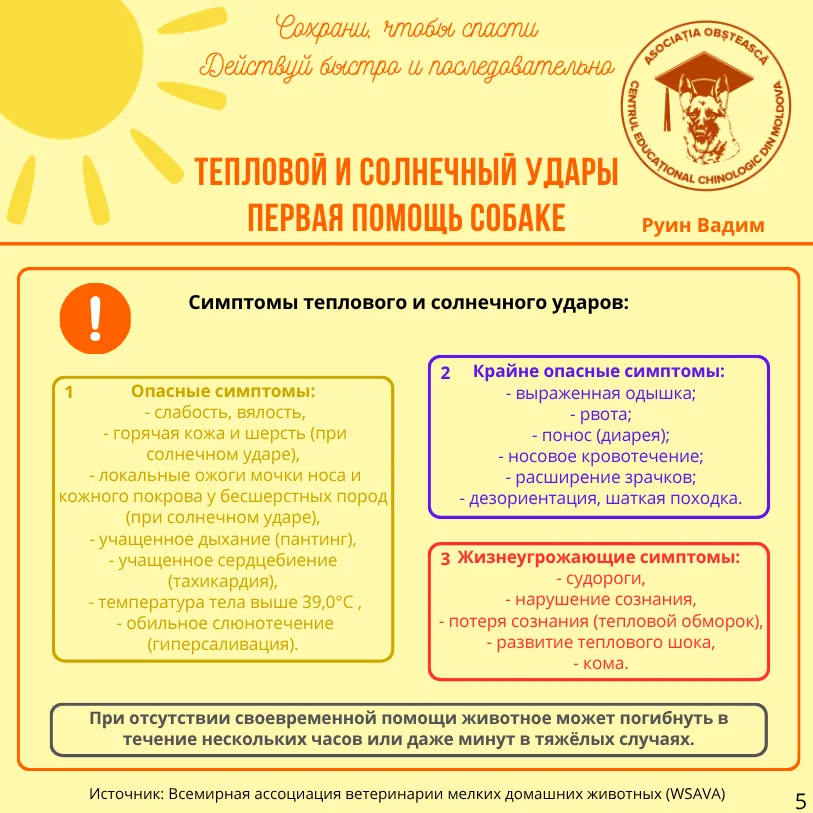
Symptoms of heatstroke and sunstroke
Dangerous symptoms
- weakness, lethargy;
- hot skin and coat (in sunstroke);
- localised burns on the tip of the nose, and on the skin in hairless breeds (in sunstroke);
- rapid breathing (panting);
- rapid heartbeat (tachycardia);
- body temperature above 39.0 °C;
- profuse drooling (hypersalivation).
Extremely dangerous symptoms
- severe difficulty breathing;
- vomiting;
- diarrhoea;
- nosebleed;
- dilated pupils;
- disorientation, unsteady gait.
Life-threatening symptoms
- seizures;
- impaired consciousness;
- loss of consciousness (heat syncope);
- onset of hyperthermic shock;
- coma.
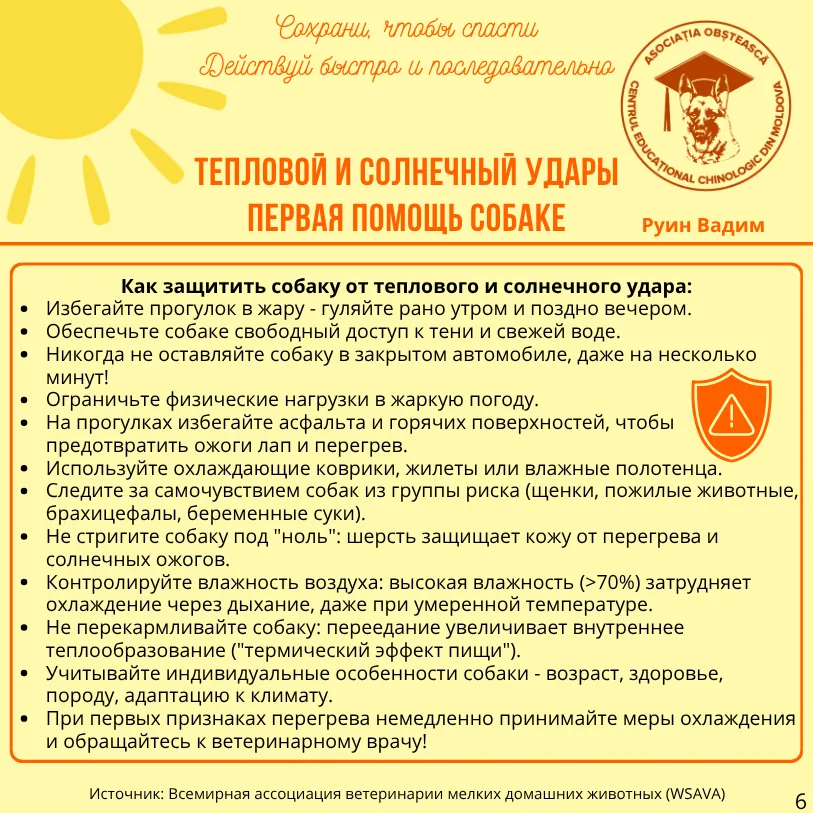
How to protect your dog from heatstroke and sunstroke
- Avoid walks in the heat of the day – walk your dog early in the morning and late in the evening.
- Make sure your dog always has free access to shade and fresh water.
- Never leave your dog in a closed car, not even for a few minutes!
- Limit physical exertion in hot weather.
- On walks, avoid tarmac and hot surfaces to prevent burnt paws and overheating.
- Use cooling mats or vests, or damp towels.
- Keep an eye on dogs in the risk group (puppies, older animals, brachycephalic breeds, pregnant bitches).
- Do not shave your dog down to the skin: the coat protects the skin from overheating and sunburn.
- Keep an eye on air humidity: high humidity (>70%) makes cooling through breathing harder, even at moderate temperatures.
- Do not overfeed your dog: overeating increases internal heat production (the “thermic effect of food”).
- Take your dog’s individual characteristics into account – age, health, breed and adaptation to the climate.
- At the first signs of overheating, start cooling the dog immediately and contact a vet!
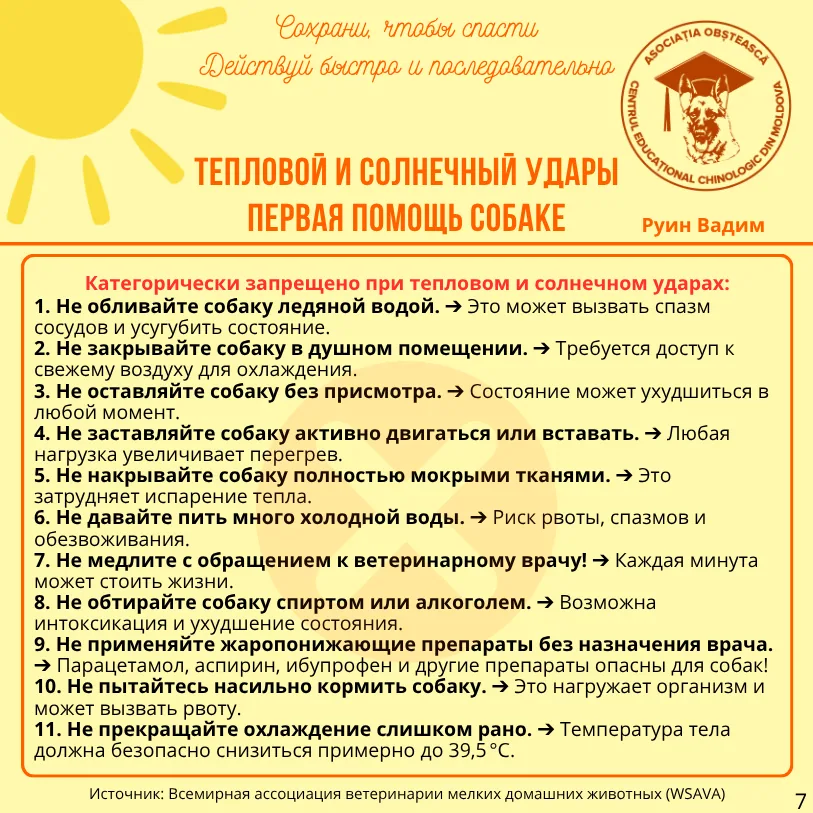
Strictly forbidden in heatstroke and sunstroke
- Do not pour ice-cold water over the dog. → This can cause vascular spasm and make the condition worse.
- Do not shut the dog in a stuffy room. → Fresh air is needed for cooling.
- Do not leave the dog unattended. → Its condition may deteriorate at any moment.
- Do not make the dog move about actively or stand up. → Any exertion adds to the overheating.
- Do not cover the dog completely with wet cloths. → This prevents heat from evaporating.
- Do not let the dog drink a lot of cold water. → Risk of vomiting, spasms and dehydration.
- Do not delay seeing a vet! → Every minute could cost a life.
- Do not rub the dog down with surgical spirit or alcohol. → This may cause intoxication and make the condition worse.
- Do not use fever-reducing drugs without a vet’s prescription. → Paracetamol, aspirin, ibuprofen and other drugs are dangerous for dogs!
- Do not try to force-feed the dog. → This puts a strain on the body and may cause vomiting.
- Do not stop cooling too soon. → Body temperature should come down safely to about 39.5 °C.
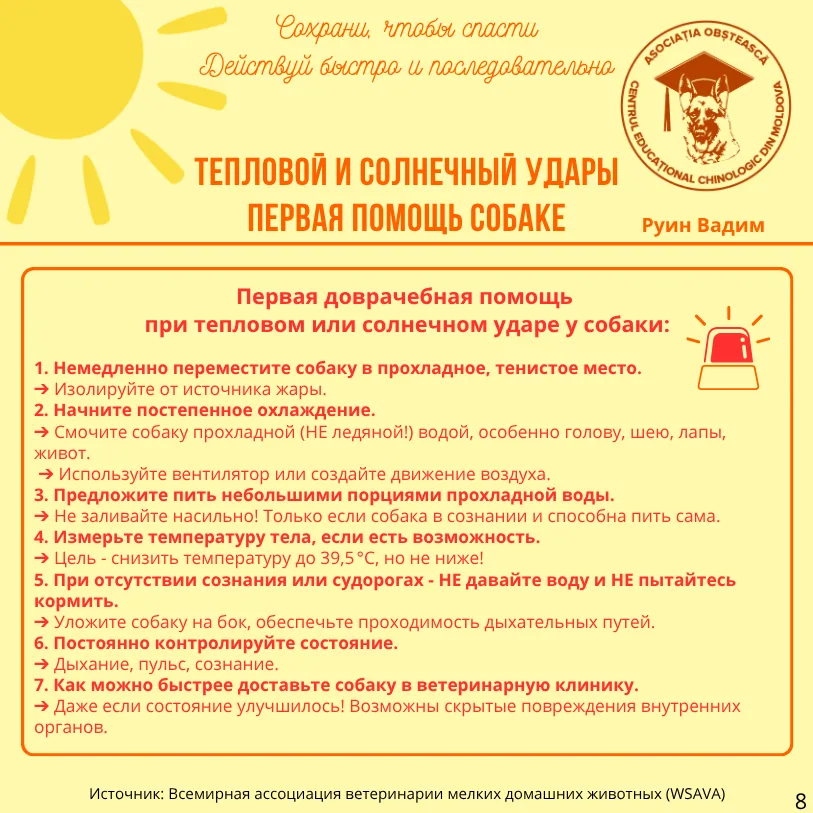
First aid before veterinary care for a dog with heatstroke or sunstroke
- Move the dog immediately to a cool, shady place. → Get it away from the source of heat.
- Start cooling gradually. → Wet the dog with cool water (NOT ice-cold water!), especially the head, neck, paws and belly. → Use a fan or create a flow of air.
- Offer small amounts of cool water to drink. → Do not force water into its mouth! Only if the dog is conscious and able to drink by itself.
- Take the dog’s temperature if you can. → The aim is to bring it down to 39.5 °C, but no lower!
- If the dog is unconscious or having seizures, do NOT give it water and do NOT try to feed it. → Lay the dog on its side and keep its airway clear.
- Monitor its condition constantly. → Breathing, pulse, consciousness.
- Get the dog to a veterinary clinic as quickly as possible. → Even if its condition has improved! There may be hidden damage to internal organs.
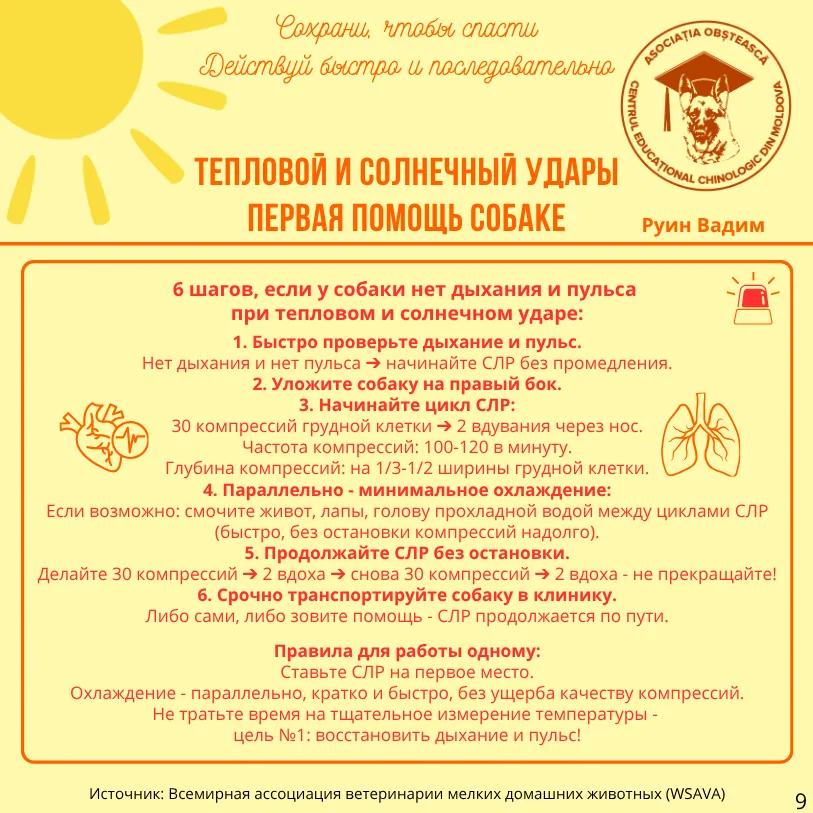
6 steps if a dog with heatstroke or sunstroke is not breathing and has no pulse
- Quickly check breathing and pulse. No breathing and no pulse → start cardiopulmonary resuscitation (CPR) without delay.
- Lay the dog on its right side.
- Start the CPR cycle: 30 chest compressions → 2 breaths into the nose. Compression rate: 100–120 per minute. Compression depth: 1/3–1/2 of the width of the chest.
- Minimal cooling at the same time: if possible, wet the belly, paws and head with cool water between CPR cycles (quickly, without pausing compressions for long).
- Keep up CPR without stopping. Give 30 compressions → 2 breaths → another 30 compressions → 2 breaths – do not stop!
- Take the dog to a clinic urgently. Either go yourself or call for help – CPR continues on the way.
Your quick response, knowing what to do step by step and cooling the dog correctly can save your pet’s life before you even reach the vet.
Remember: every dog owner should know the basic principles of first aid – simple knowledge that may one day make all the difference.
Prepared by: Vadim Ruin – veterinarian, Candidate of Agricultural Sciences, chinologmd@gmail.com.
Sources
- World Small Animal Veterinary Association (WSAVA).
- RECOVER Guidelines for Veterinary CPR and First Aid, 2024.
- Merck Veterinary Manual, Emergency Medicine, Heatstroke and CPR.
- WSAVA Emergency and Critical Care Recommendations.
- American College of Veterinary Emergency and Critical Care (ACVECC) Clinical Guidelines.
- Vet Clinics of North America: Heatstroke and Critical Care Management.
Infographic